High hopes
The first volume of Nathan Long's Ulrika the Vampire series- Bloodborn, which I reviewed back in 2010, exceeded expectations sufficiently to ensure that picking up further volumes was a no-brainer for me. Volumes 2- Bloodforged, and 3- Bloodsworn, were duly added to my Warhammer Fantasy fiction bookshelf last year. I didn't know what to expect from these books but my hopes were pretty high after the first volume. Would Nathan Long be able to sustain my interest and excitement as he further developed the tale of the tragic destiny of one of my favourite characters in my favourite fantasy world?
Vivid characterisation
Freshly blooded and still bearing emotional hallmarks of her human identity- a proud young women of position, mature beyond her years by virtue of her martial experience, Ulrika chafes under the yoke of her new elders and betters- the Bloodlines: creatures for whom a year passes in the blink of an eye; who have nothing better to do than bicker, scheme and intrigue while human generations live and die as pawns in their powerplays, and as their prey and cattle. Among these, her new kind, Ulrika finds herself cast down to the status of a mere infant. Intrepid and independent she instinctively rebels against this subservience, launching herself on a quest to survive without surrendering to total damnation.
Showing posts with label books. Show all posts
Monday, October 07, 2013
Sunday, September 01, 2013
Adventures in cabbage #1: "Go for your greens!"
I blog therefore I am
It is a truism that our hyperconnected world — this mighty engine of commerce, knowledge and communication in which codebots endlessly war over the dupes, the data and the users' processing power and into whose coffers even our free activity is given — a truism that this incredible techo-social spectacle- the crowning scientific and technical achievement of the 20th century; that this is the original Cyberpunks' mid-80s low-life visions made virtual flesh (virtual by virtue of the lack of ubiquitious direct neural jacking with its resulting sensory immersion- that emotionally empty screen so beloved of the trolls who soil and poison the social networks). When my pal's copy of William Gibson's Neuromancer circulated round to me back in 1984 little did I realise that I was about to experience with unsurpassed intensity a delicious cultural trope- getting in ahead of the avalanche unleashed by a new voice at the cutting edge of a genre-redefining honest-to-god artistic revolution. No sudden impact this. It was a slow-burning mind-bomb the full impact of which only became evident when, after a month's apparent indifference, I suddenly realised that I couldn't get the damn book out of my mind.
![]() |
| "It's electrifying!" |
Wednesday, August 29, 2012
My geeking summer #2: True North
A hot time in the old town: Games Hub Edinburgh
This post could also be subtitled ‘fB strikes again’ because, exactly as with last month’s encounter with Mark Millar at Plan B Books, this story all began on Facebook. If I recall correctly, what happened this time was that a couple of months ago I followed through on a link that a friend had liked and lo, there it was: the Games Hub Edinburgh, a fB group for an upcoming games cafe in Edinburgh. Frankly, I was gob-smacked. What an awesome idea! What a risk to take. Just WTF! More seriously though: the Games Hub Edinburgh strikes me as an idea whose time has come, and as the most important thing to happen in the Scottish gaming community since I don’t know when. OK, starting G3 back in 1998 was totally exciting, and no small achievement for all concerned, but what we have here strikes me as being different by a whole order of magnitude. GHE, after all, won’t be a club meeting weekly for some 4/5 hours. It’ll be open 12 hours/day, 7 days/week. See what I meant about awesome, and the risk?
Thursday, July 28, 2011
Wargames, politics and ethics #2: Politics? You can run, but you can't hide
Broad-brush polemic ruffles feathers
A book I picked up on sight from a recommendation on the WW2 SS Counter Colours thread, Ronald Smelser and Edward J. Davies II's 2008 scholarly study, The Myth of the Eastern Front: the Nazi-Soviet War in American Popular Culture was going to become an article even as I first read it – avidly – over xmas last year. Researching for this series- in which The Myth of the Eastern Front was going to feature centrally, I found the military hobbyists' inevitable internet hot flushes in its wake. Inevitable? In response to an academic tome?
Yes, because The Myth of the Eastern Front is part analytical historical deconstruction, and part broad-brush polemic against the 'romancers'- promulgators of an idealised vision of the Wehrmacht and the SS as honourable soldiers fighting a 'Lost Cause' against the Red horde. Smelser and Davies root this mythology in the Wehrmacht's 'last campaign': the ex-generals' postwar years of networking and spin aimed at rehabilitating the image of the German armed forces on the Eastern front.
A book I picked up on sight from a recommendation on the WW2 SS Counter Colours thread, Ronald Smelser and Edward J. Davies II's 2008 scholarly study, The Myth of the Eastern Front: the Nazi-Soviet War in American Popular Culture was going to become an article even as I first read it – avidly – over xmas last year. Researching for this series- in which The Myth of the Eastern Front was going to feature centrally, I found the military hobbyists' inevitable internet hot flushes in its wake. Inevitable? In response to an academic tome?
![]() |
| The biggest invasion of the biggest war in history: a lot there to forget |
Monday, August 23, 2010
"Kick Ass!" 5th birthday blogparty
#3. First prize draw winners!
Who are this week's lucky readers?
The entries for last week's draw have been counted and the draw has been made, using my shiny Conpulsion 2010 random number generator. I am pleased to announce the winners in the first RD/KA! 5th anniversary bumper prize draw bonanza. My congratulations to all the lucky winners; my commiserations to everyone else. Don't give up yet though: there are still three more draws to go and you can all (previous winners included remember) enter those too.
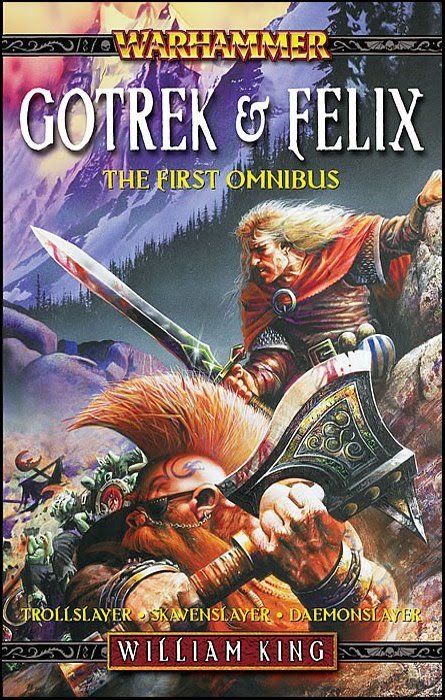
A Bill King Gotrek and Felix omnibus
Trollslayer.net.
I am delighted to be able to announce that, fresh from the trials and tribulations of flitting, Bill has been able to unearth 2 English-language copies of Gotrek and Felix: the First Omnibus which he has generously donated to the spoil heap. One of these will go to Chazz Kellner. The remaining copy will be added to a subsequent draw.
The entries for last week's draw have been counted and the draw has been made, using my shiny Conpulsion 2010 random number generator. I am pleased to announce the winners in the first RD/KA! 5th anniversary bumper prize draw bonanza. My congratulations to all the lucky winners; my commiserations to everyone else. Don't give up yet though: there are still three more draws to go and you can all (previous winners included remember) enter those too.A Bill King Gotrek and Felix omnibus
Trollslayer.net.I am delighted to be able to announce that, fresh from the trials and tribulations of flitting, Bill has been able to unearth 2 English-language copies of Gotrek and Felix: the First Omnibus which he has generously donated to the spoil heap. One of these will go to Chazz Kellner. The remaining copy will be added to a subsequent draw.
Saturday, August 14, 2010
"Kick Ass!" 5th birthday blogparty
#2. Draw the first
Four, weekly prize draws
The RD/KA! 5th anniversary bumper prize-draw bonanza will consist of four, weekly draws. This week's draw runs until midnight (BST) on Sunday 22nd August. The draws are all open to all of my readers (yes, that includes friends and family).
Draw the first's prizes
There are 5 prizes up for grabs this week.
A Bill King novel.
Trollslayer.net.
Choose any one.
The RD/KA! 5th anniversary bumper prize-draw bonanza will consist of four, weekly draws. This week's draw runs until midnight (BST) on Sunday 22nd August. The draws are all open to all of my readers (yes, that includes friends and family).
Draw the first's prizes
There are 5 prizes up for grabs this week.
A Bill King novel.
Trollslayer.net.Choose any one.
Friday, August 13, 2010
"Kick Ass!" 5th birthday blogparty
#1. Prizes! Prizes! Prizes!
"Lights... Cameras... Action!"
Alighting on this page as you have dear reader, be welcome to the 5th anniversary of "Roll dice and kick ass!". Yes, it's been 5 years to the day since I launched myself into the geek blogosphere with a report on Interaction, the 63rd Worldcon. I took to blogging a hobbyist wanting to write. What I didn't bargain on were the technicalities of creating an illustrated webzine: hunting down links and references, image work, layout; all suprisingly labourious and time-consuming. Enough already with my blood, sweat, toil and tears. Feast your eyes, dear readers, on the booty below...
Matt Forbeck
Hot off the presses, Ghosts of Ascalon — "the first original Guild Wars novel" — is Matt's and Jeff Grubb's spin on the popular fantasy MMO Tyria. I am told that Guild Wars- soon to see its first reboot, disposes of that WoW-grind by the simple expedients of a level cap and rapid character progression; which reads to me like a recipie for playing more characters having more adventures which play out more quickly. That sounds thrilling and action packed. Expect no less from messieurs Forbeck and Grubb.
Prize #1
Signed author's copy courtesy of Matt.
Alighting on this page as you have dear reader, be welcome to the 5th anniversary of "Roll dice and kick ass!". Yes, it's been 5 years to the day since I launched myself into the geek blogosphere with a report on Interaction, the 63rd Worldcon. I took to blogging a hobbyist wanting to write. What I didn't bargain on were the technicalities of creating an illustrated webzine: hunting down links and references, image work, layout; all suprisingly labourious and time-consuming. Enough already with my blood, sweat, toil and tears. Feast your eyes, dear readers, on the booty below...Matt Forbeck
Hot off the presses, Ghosts of Ascalon — "the first original Guild Wars novel" — is Matt's and Jeff Grubb's spin on the popular fantasy MMO Tyria. I am told that Guild Wars- soon to see its first reboot, disposes of that WoW-grind by the simple expedients of a level cap and rapid character progression; which reads to me like a recipie for playing more characters having more adventures which play out more quickly. That sounds thrilling and action packed. Expect no less from messieurs Forbeck and Grubb.Prize #1
Signed author's copy courtesy of Matt.
-#!#-
Tuesday, August 10, 2010
Meeting Richard Williams
The best laid plans
Unfortunately last Saturday's planned trip to Claymore fell through. I'm in a bit of a downswing just now and my main symptom is sleep disturbance, typical phase 1 for me. And so Friday night dragged on into Saturday morning leaving me facing 2 hours sleep before I was supposed to get up to catch an early bus to Edinburgh. The result was inevitable. Ah well, c'est la vie.
But still...
I did manage to make it to GW Glasgow on Friday afternoon to meet Black Library author Richard Williams. Richard proved friendly and easy-going as you'd expect and I passed a pleasant hour or so sharing his company with the other fans who'd turned out to meet him.
The inevitable signage
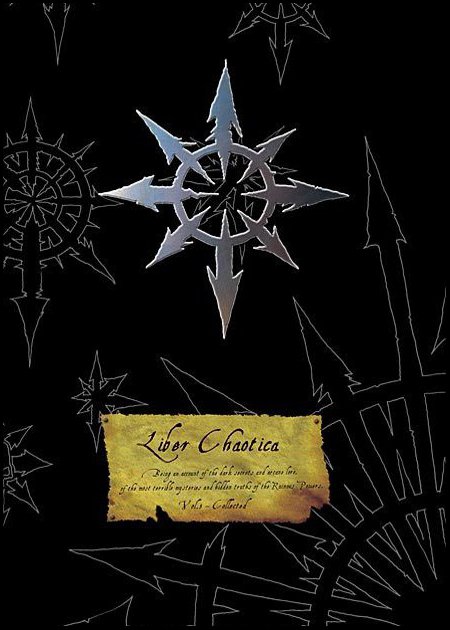
I'd taken along my copy of Liber Chaotica as planned. I'd thought that'd be all but Steve- the local manager, had managed to rustle up some copies of the currently out of print Reiksguard, in search of which I'd visited the store only the previous day and which had then been strangely absent from the shelves; so I bought that. As William and I prepared to pose for a couple of photos I figured that it'd be churlish not also to pick up a copy of the latest- and current, BL book in which Richard's writing has seen print: the anthology Legends of the Space Marines.
Unfortunately last Saturday's planned trip to Claymore fell through. I'm in a bit of a downswing just now and my main symptom is sleep disturbance, typical phase 1 for me. And so Friday night dragged on into Saturday morning leaving me facing 2 hours sleep before I was supposed to get up to catch an early bus to Edinburgh. The result was inevitable. Ah well, c'est la vie.
But still...
I did manage to make it to GW Glasgow on Friday afternoon to meet Black Library author Richard Williams. Richard proved friendly and easy-going as you'd expect and I passed a pleasant hour or so sharing his company with the other fans who'd turned out to meet him.
The inevitable signage
I'd taken along my copy of Liber Chaotica as planned. I'd thought that'd be all but Steve- the local manager, had managed to rustle up some copies of the currently out of print Reiksguard, in search of which I'd visited the store only the previous day and which had then been strangely absent from the shelves; so I bought that. As William and I prepared to pose for a couple of photos I figured that it'd be churlish not also to pick up a copy of the latest- and current, BL book in which Richard's writing has seen print: the anthology Legends of the Space Marines.Thursday, August 05, 2010
Of GW, the lure of Chaos, gribblies, and stuff
Space Hulk wins 2 Golden Geek Awards
My recent visits to the pages of Black Library novels: Graham McNeill's Heldenhammer- which I picked up at Conflict 2010, and Nathan Long's Bloodborn- which I reviewed last month; these visits to the world of the book have revived my interest in tie-in fiction set in two of my favourite gaming universes. And so it was that last Saturday saw me dropping in to my local GW in search of new reading matter. Also available was the new issue of White Dwarf. I confess I'm in the camp who finds GW's house magazine to be of limited utility in terms of adding value to my GW gaming interests- namely 40K, but I always like to read interviews with the creative types at the Design Studio. White Dwarf #368 features two, so I bought it.
Skimming through the pages of news and new releases, as you do, I was pleasantly surprised to read Jervis Johnson's grateful acknowledgement of the two 2009 Golden Geek Awards the BGG community had awarded Space Hulk, whose 3rd edition was released amid great fanfare last year. The awards were:
My recent visits to the pages of Black Library novels: Graham McNeill's Heldenhammer- which I picked up at Conflict 2010, and Nathan Long's Bloodborn- which I reviewed last month; these visits to the world of the book have revived my interest in tie-in fiction set in two of my favourite gaming universes. And so it was that last Saturday saw me dropping in to my local GW in search of new reading matter. Also available was the new issue of White Dwarf. I confess I'm in the camp who finds GW's house magazine to be of limited utility in terms of adding value to my GW gaming interests- namely 40K, but I always like to read interviews with the creative types at the Design Studio. White Dwarf #368 features two, so I bought it.Skimming through the pages of news and new releases, as you do, I was pleasantly surprised to read Jervis Johnson's grateful acknowledgement of the two 2009 Golden Geek Awards the BGG community had awarded Space Hulk, whose 3rd edition was released amid great fanfare last year. The awards were:
- Best 2-player game.
- Best artwork/presentation.
Sunday, July 04, 2010
A welcome return?
Sometimes we just can't help ourselves
Geek culture can sometimes be less a cultural panorama than a minefield for the unwary. I'm talking of course of the irrational passions and prejudices which can be oh so easily aroused by our own version of 'brand loyalty'. Sure, so-called 'mainstream' culture is no more free of blind partisanship than any other social sphere in which personal tastes are justified against other people's by being raised to the level of intellectual generalisations, or just by plain mule headedness. Mainsream culture though lacks the wide spectrum offered by edition wars- RPGs and miniatures games; new writers and/or artists- comics and books; the full range of cross-media adaptions (which rarely stray beyond prose into movies in the mainstream)- most any geek medium into most any other; Euros versus Ameritrash- boardgames; 'old-school' versus 'indie'- RPGs again. And this is just a selection. I'm sure readers could easily add to this list.
The recent Black Library Warhammer novel Bloodborn is a case in point for yours truly. Its author is Nathan Long, of whom I first heard- as I imagine would have most of my readers who recognise his name, when he took over writing the Gotrek and Felix series from Bill King, with the novel Orcslayer. You can imagine then, dear readers, that the geek spasms so induced meant that this was hardly the best introduction a reader could have to a new writer. This misbegotten mentality was only encouraged when I heard that Nathan Long was going to be writing a Gotrek and Felix spin-off series featuring Ulrika the Vampire.
Geek culture can sometimes be less a cultural panorama than a minefield for the unwary. I'm talking of course of the irrational passions and prejudices which can be oh so easily aroused by our own version of 'brand loyalty'. Sure, so-called 'mainstream' culture is no more free of blind partisanship than any other social sphere in which personal tastes are justified against other people's by being raised to the level of intellectual generalisations, or just by plain mule headedness. Mainsream culture though lacks the wide spectrum offered by edition wars- RPGs and miniatures games; new writers and/or artists- comics and books; the full range of cross-media adaptions (which rarely stray beyond prose into movies in the mainstream)- most any geek medium into most any other; Euros versus Ameritrash- boardgames; 'old-school' versus 'indie'- RPGs again. And this is just a selection. I'm sure readers could easily add to this list.
The recent Black Library Warhammer novel Bloodborn is a case in point for yours truly. Its author is Nathan Long, of whom I first heard- as I imagine would have most of my readers who recognise his name, when he took over writing the Gotrek and Felix series from Bill King, with the novel Orcslayer. You can imagine then, dear readers, that the geek spasms so induced meant that this was hardly the best introduction a reader could have to a new writer. This misbegotten mentality was only encouraged when I heard that Nathan Long was going to be writing a Gotrek and Felix spin-off series featuring Ulrika the Vampire.Wednesday, May 05, 2010
First grand "Roll dice and kick ass!" prize draw!
Spring is here and we're all celebrating long days and bright sunshine. As RD/KA!'s small contribution to these annual festivities I'm announcing my first ever prize draw.
Late extra!
Bill King's return to the Black Library to write a Warhammer Fantasy trilogy about legendary Elf heroes Tyrion and Teclis will be news only to those of my readers who don't follow the Black Library blog or other F&SF news sites, where the news broke back in February.
Bill is of course best known for his 7 Slayer novels, featuring dwarf slayer Gotrek Gurnisson and his human poet companion Felix Jaeger; and for his 4 Space Wolf novels, featuring Ragnar Blackmane. He may have 2 major characters to whom the phrase 'pointy ears' is simultaneously a term of abuse and a target designation, but writing about elves isn't new to Bill. He co-wrote with Andy Chambers the 4th edition Warhammer Armies: High Elves, in which he created most of what remains the canonical account of Tyrion and Teclis. And he wrote about the 40K Eldar in the novel Farseer.
Late extra!
Bill King's return to the Black Library to write a Warhammer Fantasy trilogy about legendary Elf heroes Tyrion and Teclis will be news only to those of my readers who don't follow the Black Library blog or other F&SF news sites, where the news broke back in February.
Bill is of course best known for his 7 Slayer novels, featuring dwarf slayer Gotrek Gurnisson and his human poet companion Felix Jaeger; and for his 4 Space Wolf novels, featuring Ragnar Blackmane. He may have 2 major characters to whom the phrase 'pointy ears' is simultaneously a term of abuse and a target designation, but writing about elves isn't new to Bill. He co-wrote with Andy Chambers the 4th edition Warhammer Armies: High Elves, in which he created most of what remains the canonical account of Tyrion and Teclis. And he wrote about the 40K Eldar in the novel Farseer.Sunday, March 14, 2010
Once more the culture vulture
Springtime for Glaswegians
If it's March in Glasgow it must be Aye Write!- Glasgow's Book Festival, now in its fifth year. Aye Write! had made little impression on me in previous years, despite my seeing the ads and the programmes in my local library each time. This was frustrating, so- determined to do better in 2010, I grabbed a programme as soon as I saw one and started looking for events. The first one which did more than just catch my eye was:
As if the due appearance of SF luminaries Ken MacLeod and Richard Morgan wasn't enough, this event was an instant choice for yours truly because the panel included Hal Duncan and Mike Cobley. Mike and Hal are old pals of mine from the Glasgow SF Writers' Circle, which featured in the first series of posts here @RD/KA!. It was this circle which drew me to Glasgow back in 1989, when I nourished active dreams of being an SF writer myself.
If it's March in Glasgow it must be Aye Write!- Glasgow's Book Festival, now in its fifth year. Aye Write! had made little impression on me in previous years, despite my seeing the ads and the programmes in my local library each time. This was frustrating, so- determined to do better in 2010, I grabbed a programme as soon as I saw one and started looking for events. The first one which did more than just catch my eye was:As if the due appearance of SF luminaries Ken MacLeod and Richard Morgan wasn't enough, this event was an instant choice for yours truly because the panel included Hal Duncan and Mike Cobley. Mike and Hal are old pals of mine from the Glasgow SF Writers' Circle, which featured in the first series of posts here @RD/KA!. It was this circle which drew me to Glasgow back in 1989, when I nourished active dreams of being an SF writer myself.
Saturday, February 27, 2010
Laughter and rage from page to stage
Yer actual culture
Thursday night there I teamed up with Gavin, Michael and Liam at Glasgow's Tron Theatre to see the Communicado Theatre Company's production of the late poet Adrian Mitchell's adaption of Nikolai Gogol's classic 1836 play, The Government Inspector. (Check the poem on Mitchell's homepage and you'll get some idea of why this man- whose name was utterly unknown to me before Thursday, has been so lamented: poems like Song in Space could conceivably finally heal the scars inflicted on yours truly- as on so many others, by poetry at school.)
Gogol: titan and progenitor
The father of one of the greatest literary movements in world history- the great Russians; of whom Dostoyevsky once said "We all came out of Gogol's 'Overcoat.'"; Gogol's works weren't new to me. A friend had lent me Dostoyevsky's (Memoirs from) The House of the Dead back in mid-80's Edinburgh. Astounded and entranced by the world I had entered, for several years thereafter I read as many of the works of these Russians as I could get my hands on. Dostoyevsky was my favourite and I also sampled Turgenev, Tolstoy and Chekhov as well as Gogol. Later I became fascinated with the Russian revolution- whose conseqences reverberated down through history as strongly as ever back in the 1980's and 90's, and I read up on that subject more avidly even than I had consumed the literature.
Thursday night there I teamed up with Gavin, Michael and Liam at Glasgow's Tron Theatre to see the Communicado Theatre Company's production of the late poet Adrian Mitchell's adaption of Nikolai Gogol's classic 1836 play, The Government Inspector. (Check the poem on Mitchell's homepage and you'll get some idea of why this man- whose name was utterly unknown to me before Thursday, has been so lamented: poems like Song in Space could conceivably finally heal the scars inflicted on yours truly- as on so many others, by poetry at school.)Gogol: titan and progenitor
The father of one of the greatest literary movements in world history- the great Russians; of whom Dostoyevsky once said "We all came out of Gogol's 'Overcoat.'"; Gogol's works weren't new to me. A friend had lent me Dostoyevsky's (Memoirs from) The House of the Dead back in mid-80's Edinburgh. Astounded and entranced by the world I had entered, for several years thereafter I read as many of the works of these Russians as I could get my hands on. Dostoyevsky was my favourite and I also sampled Turgenev, Tolstoy and Chekhov as well as Gogol. Later I became fascinated with the Russian revolution- whose conseqences reverberated down through history as strongly as ever back in the 1980's and 90's, and I read up on that subject more avidly even than I had consumed the literature.Thursday, December 03, 2009
Unexpected arrivals
A fond farewell
Many readers will be aware of last week's news that the Borders Books UK chain has gone into liquidation. I was saddened to hear this because Borders has been my favourite bookstore for several years now. For all I know Waterstone's might be a better bookshop- it was certainly my introduction to modern chainstore bookselling; but I preferred Borders' ambience. My visits there down the years have netted me a great wodge of cheap crime novels and thrillers as well as many bargains in the military history department. Borders even featured in the first series of posts here @RD/KA!
I already knew I was going to miss the place, but I didn't expect to be mildly shocked at the stark reality when Bill and I visited yesterday in search of more bargains, from the closing down sale. The shelves around the store were already picked half clean, giving the place the eerie air of the rotting hulk of a familiar old ship in which I'd travelled halfway round the world and back.
Many readers will be aware of last week's news that the Borders Books UK chain has gone into liquidation. I was saddened to hear this because Borders has been my favourite bookstore for several years now. For all I know Waterstone's might be a better bookshop- it was certainly my introduction to modern chainstore bookselling; but I preferred Borders' ambience. My visits there down the years have netted me a great wodge of cheap crime novels and thrillers as well as many bargains in the military history department. Borders even featured in the first series of posts here @RD/KA!
I already knew I was going to miss the place, but I didn't expect to be mildly shocked at the stark reality when Bill and I visited yesterday in search of more bargains, from the closing down sale. The shelves around the store were already picked half clean, giving the place the eerie air of the rotting hulk of a familiar old ship in which I'd travelled halfway round the world and back.Saturday, November 28, 2009
Pwnage and ownage
A bloglag starting with a long weekend visiting family has stretched out to more than twice as long as that thanks, above all, to the 'block'. Efforts to break on through had finally awakened a glimmer, but it was still a slog. Thank goodness then for Badger's visit last night.
Glorious carnage!
This phrase could so easily've applied to dinner as much as to the games that followed. I was cooking haddock with bacon and mushrooms, one of my favourite quick recipies from Good Food for Busy People- a book which delivers exactly what it says on the cover. Tasting while stirring everything together for the final five minutes' cookoff I immediately knew something was wrong. Sure enough, I had grabbed the wrong jar of red powder from my spice cupboard: those 2 added teaspoonsfuls of paprika were actually cayenne pepper; a disaster in the making on a par with the great pepper catastrophe of 2008.
Glorious carnage!
This phrase could so easily've applied to dinner as much as to the games that followed. I was cooking haddock with bacon and mushrooms, one of my favourite quick recipies from Good Food for Busy People- a book which delivers exactly what it says on the cover. Tasting while stirring everything together for the final five minutes' cookoff I immediately knew something was wrong. Sure enough, I had grabbed the wrong jar of red powder from my spice cupboard: those 2 added teaspoonsfuls of paprika were actually cayenne pepper; a disaster in the making on a par with the great pepper catastrophe of 2008.Friday, November 06, 2009
Echoes of a master's wordage
If James Ellroy's in town when unexpectedly so still are you; and one of the 'Men in Black' of late 80's Albacon infamy tells you he's got a spare ticket for the gig; there's only one thing to do: be there.So it was last night I found myself at the GFT for the Glasgow leg of the promotional tour for Blood's a Rover, the latest novel by this master of modern American noir; best known- thanks to Hollywood's stylish 1997 adaption, for L.A. Confidential, a novel of brutal and corrupt law enforcement in 1950's California. I knew very little about this new book, not having kept up with volumes 1 and 2 of the Underworld USA trilogy the completion of which Ellroy trumpets with all the shameless hucksterism of a 2-bit street-corner hustler you might meet in the pages of his wordage.
I'd seen James Ellroy talk about his work on TV, and this same promotional tour had taken him to BBC Radio 4's Front Row only last Monday (Ellroy starts at 14:45 in), so I knew him as forthright in his opinions and entertaining in his wordplay. And the sight of Ellroy squaring up to the lectern like a boxer grabbing the ropes to keep himself from bouncing out of his corner before the next round's bell rings; well, I couldn't but sense that we were to be treated less to a talk than to a verbal doing in the form of an author's reading.The notion barely formed, Ellroy was off; and nothing could've prepared me for the salvoes of wordage he delivered in those first few minutes. Bam! Take that. Again, bam! And another, and another. Starting slow and building up like a boxer working the speedball, Ellroy threw wordbomb after wordbomb into the mix until he had us at his mercy in a bravura display of the primal power of word and movement in the transports of delight that are the narrative arts.
I can say little more about this great performance; the clip below gives another taste to go with the R4 link above.
OK, I said I could say little more, not no more. What little I can add is that Ellroy's performance was an examplar of Rule of Thumb #1 for GM's and PC's in Matters of Description: Less is More. Sure, it'd take a roleplaying genius of a very rare (if actually extant?) kind to be able to extemporise with the poetic precision and rappers' beat of Ellroy's intensely worked prose. But to be drawn into Ellroy's world the way I was made me acutely aware of several things:
- Roleplaying description should focus on the barest mininum of crucial attributes, described as briefly as possible so that the immediate effect of the words still linger while that which has been so described plays its part in the story; to use an obvious example:
- Sight- raucous gang of men.
- Sound- drunken shouting.
- Smell- beer and piss.
- Then blammo- an attack by suddenly surprisingly sober assailants.
- Movement and gesture is as important a tool for working on people's thoughts and feelings as are words.
- There is a certain universality to the kinds of characters who people sleazy underworlds, genres notwithstanding- eg. the snoopers; so modern crime novels like Ellroy's can inspire GM's and PC's both in any game.
The reading over Ellroy opened the floor up for questions, as you'd expect. Away from the honed text long rehearsed to be pitch perfect he must still've been wearing his performer persona to some extent. Even so, he came across as frank, honest and impressively open to his audience; eg. he readily admitted that the stylistic approach he'd taken in The Cold Six Thousand (volume 2 of the Underworld USA trilogy) had been a mistake from which he'd learned due to criticism.The 'Man in Black' had got his oar in before yours truly realised that the situation demanded blatant self-advertisement. So I challenged Ellroy on his casual dismissal of the electronic media- warriors against which we were all presumed to be by Ellroy in his introduction. Feeling compelled to defend my media I pointed out:
It's the power of TV that gives us- his audience, the dynamic visual sense enabling us to walk the streets of America with his characters.- That his ever-more telegraphic prose style might be construed as an attempt to give artistic expression to the ever-diminishing attention spans we are told the electronic media inflict upon younger generations.
After all the talk about wordage there was signage, naturally enough. I'll be waiting for the paperback omnibus of Underworld USA, so I took along my battered copy of L.A. Noir. Yours truly cleverly forgot his digicam (sheesh, what kind of blogger am I?), so this blurry pic from the 'Man in Black's iPhone is the only record. Ah well. Still, I guess it gives James Ellroy a degree of plausible deniability should he feel the need for it!James Ellroy is a man who famously has little interest in the gadgets and gizmos of the electronic age. So the small kindness he showed this blogger last night was much appreciated. Remembering as I write this the sight of him surrounded by fans snapping away with phone cameras, I have to ask how Ellroy feels about the way ICT has made his public appearances more immediately the 'property' of fans who hitherto were a mere audience. How, I wonder, might Ellroy's sense of being out of step with the modern world influence his wordage? If last night's performance is anything to go by, it's not for the worse! ;)
Saturday, August 22, 2009
The original combat commander
Introduction
Regular readers might remember that the book Infantry Attacks, by the legendary Erwin Rommel, was part of my booty from UK Expo'09. I've finally got round to reading it, finishing it during my journey home from London.
Infantry Attacks (Infanterie greift an) was first published in 1937. It was this book which first brought Rommel to the attention of Adolf Hitler, a fateful moment which was ultimately to prove fatal to Rommel. It was translated into English in 1944 for the US army, one result of which was Patton's memorable remark:
The book details the actions Rommel participated in during WW1. He fought as a junior field officer on many fronts:
There are illustrations in addition to the text. These are not the photographs so familiar from many campaign histories. They are are sketches and maps of the battlefield, of a style which makes them look like they were drawn by Rommel himself. This impression is strengthened by the fact that many of the illustrations aren't maps; rather they are views of the battlefield from vantage points I can only assume Rommel actually occupied at the time.
And?
I must confess that I was a little disappointed with this book at first. It is extremely dry, written in a very curt style which provides little more than the barest account of the matters Rommel covers. This wasn't helped for me by the nationalistic tone of the book: to read Rommel in Nazi Germany singing the praises of German soldiery in what I knew was going to be an account of his role in the slaughter of WW1; a book written as a careerist manoeuvre as he sought advancement for the sake of playing a bigger part in the war he must already've seen on the horizon; well, let me just say that didn't capture my enthusiasm.
Soon enough though the book began to grow on me. The first thing that came to my attention were hints of the character of the man well-known from his exploits in the Western Desert in WW2; namely his penchant for getting into the thick of the action and so losing sight of the overall picture. Something for which he has sometimes been criticised, this was no doubt more forgivable in a junior field officer in any case.
My interest was further piqued by the commonplace references to 'squads'. I've long believed that platoons were the basic low-level tactical units on the WW1 battlefield, and that squads didn't come to fill that role until 1918. Rommel contradicts this with references to squads being given mission objectives essentially from the very start. Wikipedia's coverage of the development of infantry tactics in WW1 breaks the subject down into:
In any event, once this issue had got me to consider the book more favourably, I soon realised that I had been labouring under the impact of false expectations. I'd unwittingly been expecting a frontline commander's version of a campaign history of the sort I've read so often. Infantry Actions is a very different book. Instead of the campaign overview with telling details and vivid anecdotes to fill out an account of all levels of the action, it is a field commander's account of how he went about the business of commanding his forces in battle.
What Rommel typically gives us therefore is something like this:
Sometimes Rommel is in the thick of the action; other times he is talking about the sound of gunfire and the conduct of squads, platoons or companies from the perspective of a company or a battalion commander who often can't see these units. In all cases he is talking about the tactical situation; the demands it placed on himself and his men; how he organised, commanded and led his men to meet those demands; and whether or not it looked as if those demands could be met in pursuit of the objectives which had to be gained in fulfilment of his orders.
In other words: precisely because it is dry compared to the more familiar campaign histories, Rommel succeeds admirably in putting the reader neatly inside the head of a field officer in command of his units during intense action. Therefore this is a very good book indeed for anyone who has any interest at all in that subject matter. The breakdown of its parts also makes it ideal for dipping into, to read about this or that action. So it's no surprise that Infantry Attacks was recommended reading in the US military for several decades. I expect I'll read it again myself. ;)
Regular readers might remember that the book Infantry Attacks, by the legendary Erwin Rommel, was part of my booty from UK Expo'09. I've finally got round to reading it, finishing it during my journey home from London.Infantry Attacks (Infanterie greift an) was first published in 1937. It was this book which first brought Rommel to the attention of Adolf Hitler, a fateful moment which was ultimately to prove fatal to Rommel. It was translated into English in 1944 for the US army, one result of which was Patton's memorable remark:
"Rommel, you magnificent bastard! I read your book!"Between the covers
The book details the actions Rommel participated in during WW1. He fought as a junior field officer on many fronts:
Belgium and N. France, 1914: 6th Württemberg Infantry Regiment- the unit in which Rommel was a platoon commander, was part of the German 5th Army under Crown Prince Wilhelm of Germany; 5th Army was part of the Schlieffen plan's 'hinge'; these operations included a crossing of the Meuse river which Rommel famously crossed again with his 7th Panzer Division in 1940, at Dinant some 100km north of his 1914 field of operations. (BTW: I know I misspelt 'Schlieffen' on the map's labels!)
The Argonne, 1915: a forested region just east of Verdun (you can see its location on the small map- above), the Argonne was where Rommel got his main taste of the trench warfare that was infamously to dominate the Western Front for the next 4 years; the picture- above left, is from the aftermath of the heavy fighting in the Argonne, and shows what has since become an archetypal image of the unprecedented destruction wrought by the massed artillery bombardments of WW1.
- The High Vosges, 1916: in October 1915 Rommel was posted to the Württemberg Mountain Battalion with which he served for the rest of the war; after long training the battalion went into the line in the Higher Vosges- a range of mountains in France close to the Franco-German border.
- Rumania, 1916: Rumania entered the war on the Allied side on August 27th 1916; as a result Rommel's Württemberg Mountain Battalion was transferred to Transylvania (in German: Siebenbürgen); there the battalion took part in several successful mountain attacks.
- Carpathians, 1917: the Württemberg Mountain Battalion was again transferred, to be part of a summer offensive to close down the Russian front after the revolution of February 1917; although still a junior officer, Rommel played a significant role in two weeks' heavy fighting to take and hold Mount Cosna.
Carinthia, 1917: Rommel's last operation as a field commander in WW1 was the 12th Battle of Isonzo- better known as the Battle of Caporetto, and referred to by Rommel as the Tolmein offensive, for the town near the Württemberg Mountain Battalion's assembly area (this can be seen as 'Tolmino' on the map- above right); the offensive was a huge success for the Central Powers, and a complete vindication of the new stormtrooper and infiltration tactics which Germany had developed.
There are illustrations in addition to the text. These are not the photographs so familiar from many campaign histories. They are are sketches and maps of the battlefield, of a style which makes them look like they were drawn by Rommel himself. This impression is strengthened by the fact that many of the illustrations aren't maps; rather they are views of the battlefield from vantage points I can only assume Rommel actually occupied at the time.
And?
I must confess that I was a little disappointed with this book at first. It is extremely dry, written in a very curt style which provides little more than the barest account of the matters Rommel covers. This wasn't helped for me by the nationalistic tone of the book: to read Rommel in Nazi Germany singing the praises of German soldiery in what I knew was going to be an account of his role in the slaughter of WW1; a book written as a careerist manoeuvre as he sought advancement for the sake of playing a bigger part in the war he must already've seen on the horizon; well, let me just say that didn't capture my enthusiasm.
Soon enough though the book began to grow on me. The first thing that came to my attention were hints of the character of the man well-known from his exploits in the Western Desert in WW2; namely his penchant for getting into the thick of the action and so losing sight of the overall picture. Something for which he has sometimes been criticised, this was no doubt more forgivable in a junior field officer in any case.
My interest was further piqued by the commonplace references to 'squads'. I've long believed that platoons were the basic low-level tactical units on the WW1 battlefield, and that squads didn't come to fill that role until 1918. Rommel contradicts this with references to squads being given mission objectives essentially from the very start. Wikipedia's coverage of the development of infantry tactics in WW1 breaks the subject down into:
- Stormtroopers: a formation first devised by the Germans in 1915 and first used on a large scale by the Russians (this surprised me: the Russians in WW1 are generally known for their infantry tactics the same way that the British were known for tank design in WW2; ie. not at all!) in 1916.
- Infiltration tactics (or Hutier tactics, for Oskar von Hutier, the German general who devised them).
In any event, once this issue had got me to consider the book more favourably, I soon realised that I had been labouring under the impact of false expectations. I'd unwittingly been expecting a frontline commander's version of a campaign history of the sort I've read so often. Infantry Actions is a very different book. Instead of the campaign overview with telling details and vivid anecdotes to fill out an account of all levels of the action, it is a field commander's account of how he went about the business of commanding his forces in battle.
What Rommel typically gives us therefore is something like this:
- We marched all day, bivouaced late and ate little.
- Orders came through in the dead of night and we set off.
- Reaching our objective we (I) conducted reconnaisance to determine:
- A breakthrough point for the assault units.
- Positions for the fire support units.
- Avenues of approach.
- A plan was formulated, eg.:
- 1st platoon would be the assault force.
- A company on the left, and B company with 3rd and 4th HMG platoons on the right would provide fire support.
- D company plus 5th HMG platoon would be in reserve.
- Orders were given, my units moved into position, and the action began.
- As the action developed:
- The fire support plan pinned the enemy as expected, the assault forces broke into the enemy position, and I ordered a platoon from D company forward to exploit the breakthrough.
- A company was pinned down by heavy fire and strong enemy forces appeared, threatening to turn our left flank, so I ordered another platoon from D company plus the 5th HMG platoon up to hold the line.
- The initial breakthrough secured, I ordered 2 platoons of B company plus 3rd HMG platoon to consolidate on the assault platoon to prepare for further exploitation.
- And so on and so on until the action was concluded.
Sometimes Rommel is in the thick of the action; other times he is talking about the sound of gunfire and the conduct of squads, platoons or companies from the perspective of a company or a battalion commander who often can't see these units. In all cases he is talking about the tactical situation; the demands it placed on himself and his men; how he organised, commanded and led his men to meet those demands; and whether or not it looked as if those demands could be met in pursuit of the objectives which had to be gained in fulfilment of his orders.
In other words: precisely because it is dry compared to the more familiar campaign histories, Rommel succeeds admirably in putting the reader neatly inside the head of a field officer in command of his units during intense action. Therefore this is a very good book indeed for anyone who has any interest at all in that subject matter. The breakdown of its parts also makes it ideal for dipping into, to read about this or that action. So it's no surprise that Infantry Attacks was recommended reading in the US military for several decades. I expect I'll read it again myself. ;)
Tuesday, August 04, 2009
Claymore 2009: expectations fulfilled but not exceeded
The new home
To cut to the chase: Claymore lived up to the cautious optimism engendered by its long overdue change of venue; and that's the "cautious" as much as the "optimism". The new venue is Telford College's new main campus, opened less than 3 years ago. So, while not pretty outside, the building is spacious, bright and airy inside. A far cry from the cramped and stuffy lodgings from which Claymore suffered at the old Meadowbank venue, this was unanimously praised by everyone to whom I spoke.
That said, readers will already recognise there were reservations (and I'm here considering the venue not the event):
The painting demo
The painting demo was my next port of call after the bring-and-buy. This had its own room, showing already the new attractions on offer at the more spacious venue. The demo was quite well laid out, with a webcam, digital projector and screen; all of which showed the potential of the latest technology to make something really interesting of an event like this.
The tables
I did visit the 3 participation games I'd found listed in the programme. The first I found was the Dingwall Wargames Club's 1/144th scale Dambusters game (not much to see on the website BTW, but there are contact details). The table was full so I booked my seat and headed for the Dundee Skirmishers. When found this proved to be a demonstration game, but I took some pictures of the frankly quite impressive layout.
"Bombs away!"
It was soon time for my Dambusters game with the Dingwall club. This game was delightfully simple:
Thirty minutes on 'Bloody Omaha'
The tagline for this game staged by Royal Air Force Wargamers Association (Leuchars) was (I paraphrase):
To cut to the chase: Claymore lived up to the cautious optimism engendered by its long overdue change of venue; and that's the "cautious" as much as the "optimism". The new venue is Telford College's new main campus, opened less than 3 years ago. So, while not pretty outside, the building is spacious, bright and airy inside. A far cry from the cramped and stuffy lodgings from which Claymore suffered at the old Meadowbank venue, this was unanimously praised by everyone to whom I spoke.
![]() |
| Spacious, bright and airy: the main convention hall (the college refectory) |
- The second convention room was in the gym; not quite as nice as the refectory; and a few minutes away - this didn't bother me as much as it did others.
- The bring and buy: the great failure of the new venue this was (again by unanimous opinion) more cramped and poky than it had been at Meadowbank.
The painting demo
The painting demo was my next port of call after the bring-and-buy. This had its own room, showing already the new attractions on offer at the more spacious venue. The demo was quite well laid out, with a webcam, digital projector and screen; all of which showed the potential of the latest technology to make something really interesting of an event like this.
![]() |
| Our painters (in no particular order): Andrew Taylor, Brian Philips and David Imrie |
Did our 3 painters make the most of this chance to showcase their skills and pass the fruits of their experience? To be honest I don't know because I didn't return after my brief early visit. Of what I did see I can say:
- Our painters looked as if they'd suffered a few teething problems with the basic logistics of their event, which is hardly surprising for a first go.
- There was no sign of a programme: it strikes me that a schedule structured around the 3 basic experience levels- beginner, intermediate and advanced; that this would've made for an event a more attractive showcase for the painters' skills.
The tables
I did visit the 3 participation games I'd found listed in the programme. The first I found was the Dingwall Wargames Club's 1/144th scale Dambusters game (not much to see on the website BTW, but there are contact details). The table was full so I booked my seat and headed for the Dundee Skirmishers. When found this proved to be a demonstration game, but I took some pictures of the frankly quite impressive layout.
| The Soviets move out from the cover of the treeline |
It was soon time for my Dambusters game with the Dingwall club. This game was delightfully simple:
- Objective: 4 Lancasters must breach a Ruhr dam in Operation Chastise, as immortalised in the 1955 movie The Dam Busters.
- Gameplay: Make a bombing run lasting 6 turns, taking your luck with the flak and trying to bring your Lancaster to the ideal speed and height before you dropped your famous bouncing bomb.
- Rules:
- Each turn, you could accelerate/decelerate or climb/dive.
- Roll 1d6 to determine how many feet or mph you gained or lost.
- Flak was likewise a simple roll of 1d6 to generate results varying from damage to enforced changes in speed or height.
- Each player had 3 'jokers'; cards they could use once each, eg. for dice modifiers or rerolls.
- The final bombing run was a simple percentage dice roll with modifiers for damage, and for degrees of variance from the ideal speed and height.
| Yours truly prepares to brave the flak again |
After this promising start it all went pear-shaped with the dice so that I ended up providing some light entertainment for everyone else. The 'high point' was when I needed to roll high; rolled 1; decided to use my 'joker' for a reroll; and rolled the inevitable 1 again. The hilarity of my bombing run notwithstanding I was able finally to hit the dam with a lucky roll of 29%. Three of our four planes hit the dam on that run, for 69% damage. It was the highest score at that time but we were well down the day's rankings in the end, including at least 3 who managed to blow the dam.
Thirty minutes on 'Bloody Omaha'
The tagline for this game staged by Royal Air Force Wargamers Association (Leuchars) was (I paraphrase):
"The average life expectancy of a US Ranger in the first wave at Omaha beach on June 6th 1944 was 30 minutes. Can you survive that long?"Six hardy volunteers led a squad of 12 US Rangers fully equipped with bangalore torpedoes and satchel charges, led by none other than Captain Tom Hanks (AKA. Captain Miller) himself. Our objective was simple: get up that beach and blow that bunker!
| Two of the RAFWA guys beside their lovely table |
The picture above shows the details of the table:
The rules were simple again:
My BAR man (each of us had 1 character from Saving Private Ryan: I think mine was Pvt. Reiben with the BAR) was in the front, so he was targetted first. He was dead in 2 turns, but not before he'd managed to lay down some effective fire on the bunker. Quickly out of the landing craft and doubling in bounds via the beach obstacles our squad soon managed to reach the shingle bank, led by my #2 character, who proved to be the day's crackshot with 2 KIA's to his credit. We were helped in this dash by the inaccuracy of the German mortars, which constantly missed us, and which finally only hit the landing craft once we'd all made our exit.
Safely hunkered by the shingle, we reorganised and waited while a bangalore cleared a weak section of the wire. Then our men were running towards that bunker as fast as their legs could carry them. We'd picked up a flamethrower from a casualty at the shingle, and our flamethrower man proved deadly. One attack disposed of the HMG and a 2nd attack cleared the trench in front of the bunker.
The rest of us sprinted round the back to finish the bunker off with our satchel charges. Of course, in our haste we'd forgotten the 'murder hole' (about which we'd been quietly reminded by one of the RAF guys; I'd actually thought he was just talking 'in character' so to speak). We were lucky: we managed to set our satchel charges before the German in the murder hole opened fire, killing my character with a single shot just before the bunker blew. We'd won, and our casualties had been remarkably light, all things considered.
Afterthoughts
Both of these games were great fun: simple concepts cleanly executed for maximum ease of play on the day; ideal public participation games in other words. The 'Bloody Omaha' game was my personal favourite:
The swag
I bought some stuff as you'd expect, mostly books. Of particular note was a pile of 6 (count them: 6!) Osprey Campaign series paperbacks for a mere £25. You can be sure I availed myself of that offer with enthusiasm dear readers. The same trader had many fascinating books at irresistibly reduced prices, one of which was an odd little volume: Britain, France, and Belgium, 1939-1940, by Brian Bond. I say "odd" because books on this campaign are relatively rare; rarer still are books which deal with the geopolitical background to the Anglo-French strategy instead of merely rehashing the familiar story of the German blitzkrieg. I may have more to say about this book in the future.
And I treated myself to a new game, naturally enough. More about this too in due course no doubt.
The verdict
This year was as much fun as I've had at Claymore in many a year. The sheer pleasantness of the new setting played an important part in that, as did the comforting rituals of catching up with old friends. Most important though was the simple application of the lesson I learned at UK Expo'09: have something to do. You can be sure I'll be applying this to future visits to Claymore. Meanwhile, a big thank you to the guys from Dingwall and Leuchars, as well as to all at SESWC for all their efforts. ;)
- The brewed-up Sherman complete with poor GI who'd lost his legs when the tank ran over them.
- The beach obstacles, including the damn wire.
- The bunker.
- And our landing craft.
The rules were simple again:
- We were mortared.
- We were machine-gunned.
- We moved (8" minus wounds).
- Then we fired - 1, 2 or 3d10 depending on weapon, needing a 9+ to hit (pesky bunkers).
- Then we took our actions, eg. doing first aid or setting a bangalore.
My BAR man (each of us had 1 character from Saving Private Ryan: I think mine was Pvt. Reiben with the BAR) was in the front, so he was targetted first. He was dead in 2 turns, but not before he'd managed to lay down some effective fire on the bunker. Quickly out of the landing craft and doubling in bounds via the beach obstacles our squad soon managed to reach the shingle bank, led by my #2 character, who proved to be the day's crackshot with 2 KIA's to his credit. We were helped in this dash by the inaccuracy of the German mortars, which constantly missed us, and which finally only hit the landing craft once we'd all made our exit.
| Four of our brave team, including (on my right) the hero of the hour: our medic |
The rest of us sprinted round the back to finish the bunker off with our satchel charges. Of course, in our haste we'd forgotten the 'murder hole' (about which we'd been quietly reminded by one of the RAF guys; I'd actually thought he was just talking 'in character' so to speak). We were lucky: we managed to set our satchel charges before the German in the murder hole opened fire, killing my character with a single shot just before the bunker blew. We'd won, and our casualties had been remarkably light, all things considered.
Afterthoughts
Both of these games were great fun: simple concepts cleanly executed for maximum ease of play on the day; ideal public participation games in other words. The 'Bloody Omaha' game was my personal favourite:
- It was a lovely piece of work, featuring Tamiya models which were a bit of a nostalgia rush for yours truly.
- The combination of simple rules; just enough players to generate command confusion; and the relentless pressure of the GM's made for a tense and dramatic half hour's gaming.
- On top of all that, my hooting and hollering was largely in celebration of success instead of in an ironic response to ever more hilarious failure.
The swag
I bought some stuff as you'd expect, mostly books. Of particular note was a pile of 6 (count them: 6!) Osprey Campaign series paperbacks for a mere £25. You can be sure I availed myself of that offer with enthusiasm dear readers. The same trader had many fascinating books at irresistibly reduced prices, one of which was an odd little volume: Britain, France, and Belgium, 1939-1940, by Brian Bond. I say "odd" because books on this campaign are relatively rare; rarer still are books which deal with the geopolitical background to the Anglo-French strategy instead of merely rehashing the familiar story of the German blitzkrieg. I may have more to say about this book in the future.
And I treated myself to a new game, naturally enough. More about this too in due course no doubt.
The verdict
This year was as much fun as I've had at Claymore in many a year. The sheer pleasantness of the new setting played an important part in that, as did the comforting rituals of catching up with old friends. Most important though was the simple application of the lesson I learned at UK Expo'09: have something to do. You can be sure I'll be applying this to future visits to Claymore. Meanwhile, a big thank you to the guys from Dingwall and Leuchars, as well as to all at SESWC for all their efforts. ;)
Sunday, June 14, 2009
UK Games Expo'09 #4: Old friends and new stuff
I commented yesterday on the "paramount contribution the tournaments had made to my enjoyment of the Expo". More than a matter of mere highlights, they were the absolute backbone of everything I did on that long weekend. Having something to do each day meant that I wasn't just drifting aimlessly, as I have done at conventions so often in the past. And even the familiar drifting through the various halls seemed more enjoyable. Perhaps because they were a part of a greater whole? Or perhaps just because I enjoyed telling people I met about my own part in the Expo?All of which is by way of introduction to a highlight of my wanderings through the halls crammed with trade stands, demo games, and people- lots and lots of people.
Gordon Lamont and Snow Tails
The oldest of old hands or most dedicated readers of blog archives might remember that Gordon Lamont (one half of the dynamic duo that is Fragor Games) featured in the 2nd post here at RD/KA!. Regular readers will probably remember Gordon from my reports about DiceCons, which he helps organise alongside his associates in the SBGA.I'd heard about Fragor Games' new game Snow Tails on the net, naturally enough; had seen some preview pictures; and had seen Gordon sheltering under an umbrella from our lovely summer rain while I was heading to the Clarendon on Saturday, so I knew he was at the Expo. For some reason though, I was still surprised to find Gordon demoing Snow Tails.
I enjoyed my first game of Snow Tails, a game about racing dog sleds in the snow. I spotted 1 or 2 similarities with the only Euro-racer I own: Mississippi Queen. Most of the game though, was completely new. The most significant new feature is the cardplay players use to control their movement.
Each player has their own deck of dog cards, each numbered 1, 2, 3, 4 or 5 IIRC, and from which they will maintain a 5-card hand. As many as 3 cards can be played each turn, 1 each into 1 of 3 places:
- Left dogline.
- Right dogline.
- Brakes.
There are various tweaks to this core mechanic. Among the more important are:
- Each time you collide with something bigger than your sled (ie. not another sled), or exceed cornering speed limits, your sled is 'dented', and you have to add a dent card to your hand; useless cards that count against your 5-card hand limit and which cannot be disposed of in any way, dent cards limit the range of choices you have each turn.
- You can only play more than 1 dog card in a turn if they are all the same value.
I wasn't alone in that. I met several groups of gamers that Saturday afternoon who were just settling down to play their newly acquired copies of Snow Tails, and who were all excited at the prospect of meeting one of the designers. It was just a shame that I couldn't offer them better directions as to how they might track Gordon down.
In any event, the praise for Fragor Games' latest offering was sufficient to give our favourite dynamic duo of designers the UK Games Expo 2009 award for Best New Game. Congratulations to Fraser and Gordon both. Lang may yer lums reek!
And stuff
Entry fees and beerage aside you can be sure, dear readers, that money changed hands between me and traders last weekend in Birmingham. I bought a couple of games that had been on the horizon of my interest for some time. I also picked up an absolute bargain boardgame 2nd hand from a fellow C&C:A campaigner (thanks again matey!). More on these as they hit the table, I expect.Books too figured large in my quietly conspicuous consumption. I picked up a good half dozen or so new WW2 books. That particular splurge began on the Saturday when I chanced to notice Rommel's Infantry Attacks. My swither was just some kind of game I played with myself before succumbing. Other books quickly followed, opening the floodgates so that I had several games and doubly several books in the luggage I took home as compared to the luggage I'd brought south.
One last big thank you...
... goes out to Andy.
Andy booked our hotel, our tickets, and did all the driving; so that from day one of my plans I could relax in the knowledge that all I had to deal with was my own event. I couldn't've done it without your support pal. Thank you very much. ;)
Related@RD/KA!
UK Games Expo'09
- #1: Time to kill
- #2: And so to war
- #3: I eat dirt and die
Subscribe to:
Posts (Atom)


.jpg)


